So can a Fishin Frenzy strategy really change your odds?
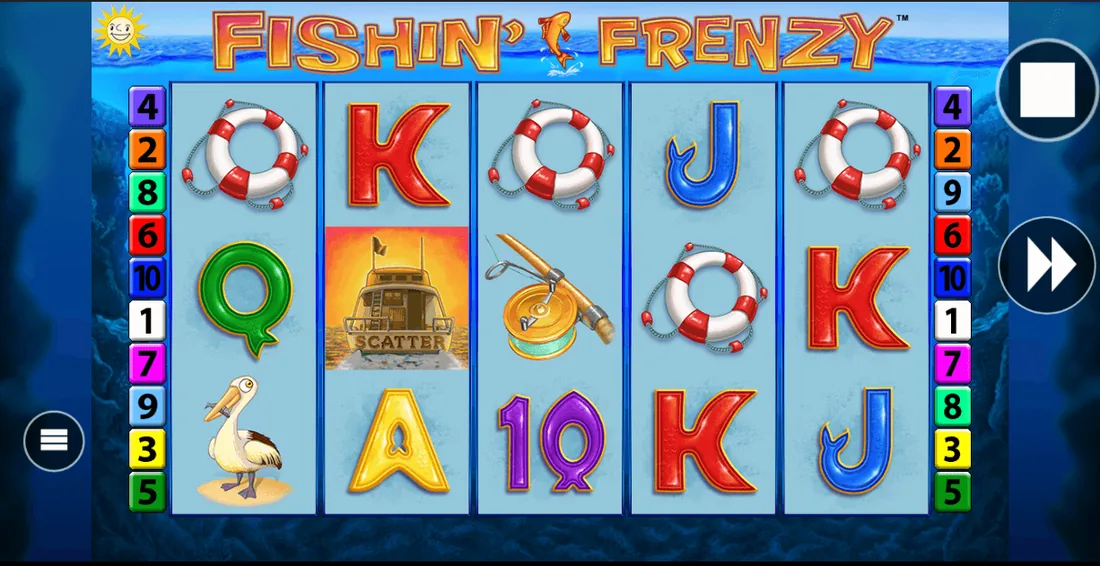
Start with a rule that matters more than any alleged Fishin Frenzy system: legal UK real-money play is offered only by operators holding a UK Gambling Commission remote licence. You can check the operator in the UKGC public register and match its licence number shown in the site footer. That local check does not improve your odds, but it establishes who is legally supplying the game and where your support, complaints and safer-gambling tools apply.
Once that is confirmed, the important question is not which button supposedly produces more wins. It is which decisions remain under your control. The honest answer is limited but useful: control the stake, decide when to stop, use deposit and loss limits, and understand what each game mode means. Everything else is either a preference or a myth dressed up as a strategy.
Why hot and cold streaks do not reveal the next result
Fishin Frenzy uses random outcomes, so previous spins do not make a particular result more likely. A long run of losses does not make the next paid symbol due, and a winning run does not prove that a pattern has been found. This is why approaches such as waiting for a long dry spell, increasing after every miss or reducing after a win are presented so persuasively in online tip lists: they create a convincing story without changing the underlying probability.
Randomness also means that no timing system can isolate a favourable moment. Changing between stake levels does not unlock a better sequence of results. Neither does switching games or modes at a carefully selected point. If a feature is genuinely random, the result does not know what happened before it; if a choice affects the maths, the rules and paytable should explain how rather than leave you to infer a secret pattern from a few sessions.
- Martingale: doubling after a loss does not recover earlier losses reliably and can turn a modest budget into a dangerously large stake.
- Fixed wins: a target based on doubling the bet after every loss treats random losses as though they must eventually end at a predictable point.
- Pattern hunting: visual patterns cannot predict an independently generated outcome.
- Increasing bets after losses: this changes the exposure, not the odds, and makes a losing session more expensive.
- Claiming certainty: no bankroll method can guarantee a profit from random play.
The four decisions you genuinely control
Control does not mean finding a hidden winning formula. It means removing avoidable choices and setting firm boundaries before the session starts. Your stake can be kept small enough not to matter, your stop condition can be written down, and your deposit can be limited before impulse gets a chance to negotiate. Choosing a mode also matters, but mainly because each mode may have different rules, cost or volatility, not because one contains a secret progression.
Avoid confusing frequent small wins with better overall value. A session can look busy while producing a poor net result, just as one large return can occur inside an otherwise negative session. Evaluate the whole session and your repeat behaviour, not a single celebratory moment. Any wagering requirement must be read carefully as well: it is always part of the offer terms and should influence whether the activity is worth starting, not be treated as an obstacle that a clever betting pattern will automatically beat.
Reading volatility without turning it into a prediction
Volatility describes how widely outcomes may vary around the expected result. It does not tell you what the next spin will produce. A high-volatility game can deliver infrequent, larger returns and substantial losing sequences; a lower-volatility game may produce a steadier pattern with different total returns. These descriptions are about distribution and risk, not a timetable for wins.
The dangerous error is assuming that high volatility is due for a rebound. If outcomes are independent, a long loss run does not create a debt that the next spin must repay. Equally, a modest-looking sequence of returns does not guarantee that a larger feature is approaching. Read the published game information for the intended volatility range, prize structure and feature rules, then choose whether the pace suits your session rather than trying to turn statistical variation into an instruction.
- High volatility means larger swings are possible, including extended runs with little or no return.
- Low volatility does not mean frequent wins or protection from losing the entire session budget.
- A feature multiplier changes a particular result; it does not make that result more likely to occur.
- A smaller stake can reduce financial exposure while leaving the underlying game maths unchanged.
Mistakes that become expensive very quickly
The most expensive mistakes are usually emotional rather than mathematical. Chasing a loss asks the session budget to cover a result that was never owed to you. Removing your first cash-out leaves the balance exposed to further spins. Playing with money needed for bills turns entertainment into financial stress, while treating a previous win as an established profit can persuade you to continue after the session has already delivered its main return.
UK payment rules provide another boundary. Credit cards are banned for gambling, and any payment method must be in your own name. Use only a listed method such as a debit card, PayPal, Apple Pay, Open Banking or Trustly, or paysafecard, and check the operator’s withdrawal terms before depositing. Do not use another person’s account or payment details to bypass verification.
- Depositing more after a loss because the next session feels due to compensate.
- Raising the stake simply to shorten the perceived journey to a target.
- Borrowing, using essential household money or chasing with a credit facility.
- Assuming a bonus balance is equivalent to withdrawable cash.
- Skipping the rules because a promotional message emphasises the prize rather than the wagering condition.
A simple session plan for a £10.00 budget
A workable plan starts with a disposable amount. If your chosen loss limit is £10.00, deposit no more than that and do not top it up during the session. Choose a stake small enough to allow many spins without rushing. For example, a £0.20 stake gives fifty attempts from that budget, but the number of attempts matters less than understanding that additional spins remain random and the budget may be exhausted without a return.
- Check the operator in the UKGC public register and confirm the licence number in the footer.
- Set the deposit, loss and time limits while calm, before opening the game.
- Read the paytable, mode rules, wagering terms and volatility information.
- Begin with the smallest comfortable stake and make no increase because of a losing run.
- Stop when the time limit, loss limit or deposited balance is reached, whichever comes first.
- Cash out eligible winnings and record the result without judging the session solely by its final balance.
| Boundary | Example | Practical rule | |
|---|---|---|---|
| Deposit limit | £10.00 | No top-ups during the session | → |
| Stake | £0.20 | Keep within the £5.00 cap, or £2.00 for ages 18–24 | → |
| Time limit | 20 minutes | Stop when the timer expires | → |
| Loss limit | £10.00 | Never replace it with a larger figure | → |
The affordability rules are another reason to keep this simple. Affordability checks begin from £150.00 in monthly net deposits, and operators may use credit-reference information during the initial stage. A failed or incomplete check may restrict play or withdrawals, so provide accurate information and do not try to disguise deposits. The aim is not to pass a test but to keep gambling within means that are genuinely available to you.
What a fair conclusion about Fishin Frenzy looks like
Fishin Frenzy can be entertainment, but the game does not owe you a recovery, a profit or a particular feature trigger. A strategy cannot make random outcomes predictable. The practical benefits of using a system are behavioural: it can stop a session from expanding, make the stake predictable and provide a clear exit. Those benefits do not improve the mathematical chance of winning.
Choose a UKGC-licensed operator, verify the licence number in the footer and use only your own payment method. Check the game rules and wagering conditions, select a stake within the applicable cap, and set a deposit such as £10.00 that you can afford to lose. Pay attention to Faster Payments or other listed withdrawal methods. The first withdrawal is often the slowest because document checks normally take 24–48 hours, so avoid treating an uncleared request as a failed game.
UK player winnings are tax-free, while the operator pays the applicable gambling duty. That fact does not create an edge or change the game’s maths. The most disciplined conclusion is also the least dramatic: treat deposits as spent, accept that losing runs are part of high-volatility play, and stop when your chosen limits say so. No system can honestly promise a win.
FAQ
Is there a Fishin Frenzy betting system that guarantees profit?
No. Random outcomes cannot be forecast reliably by stake progressions, timing methods or pattern-based tips. A system may help you control exposure and set a stop point, but it cannot remove the house edge or guarantee a return.
Should I increase my stake after a losing streak?
No. A losing streak does not make a win due, and increasing the stake raises the cost of continued losses. Keep the stake within your chosen limit and the applicable UK cap of £5.00 per spin, or £2.00 for ages 18–24.
Does high volatility mean a big win is close?
No. High volatility describes the scale and frequency of possible returns, including extended losing sequences. It does not provide a countdown to a feature or make the next result more likely.
How can I tell whether a Fishin Frenzy site is legitimate in the UK?
Look for the UKGC licence number in the footer and check the operator in the UKGC public register. Real-money play must be offered by a licensed operator, and the payment method used must be in your own name.